
 Housing Crisis

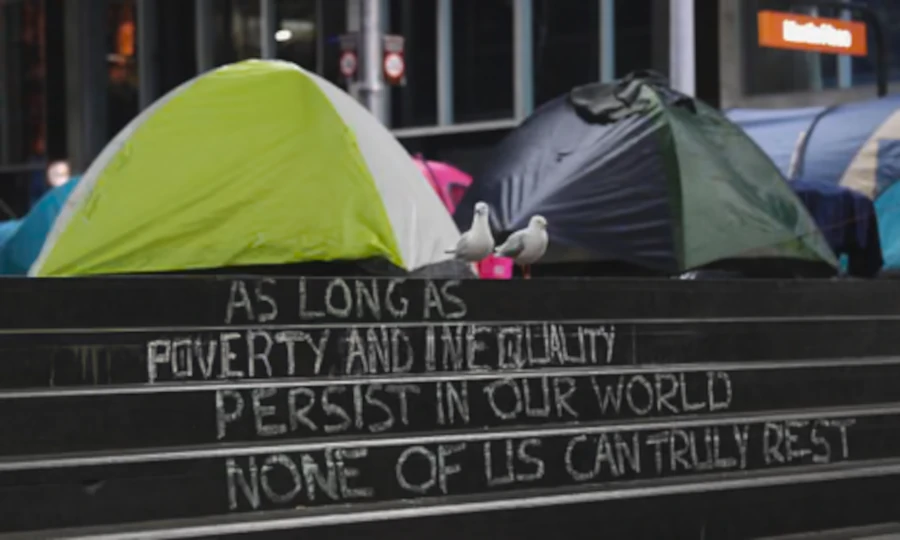
There is a particular kind of silence that settles over modern political argument just before an election, and it is usually filled by the thud of large numbers hitting the table.
We know the ritual by heart. A minister steps up to a lectern, flanks themselves with architectural renderings of sunlit mid-rise apartments, and unveils a figure with several zeroes attached. Five hundred thousand dwellings. Ten billion dollars. A bold, visionary blueprint to finally tame the housing beast. The press gallery dutifully records the target, the opposition claims the target is either hopelessly inadequate or hopelessly unachievable, and the cycle churns on.
It is an intoxicating game because it feels like politics operating at its most substantive. It speaks the language of engineering, of macroeconomics, of grand statecraft.
Except it isn’t. Or, at least, it isn’t in the way we tell ourselves it is. Because in the process of turning an existential social crisis into a contest of rival spreadsheets, we perform a curious intellectual sleight of hand: we conflate an administrative aspiration with an actual, tangible home.
Consider the social contract that quietly underpinned Australian life for much of the post-war era. It did not promise that everyone would own a quarter-acre block in an inner-ring suburb, nor did it guarantee perpetual affluence. But it did offer a foundational bargain: if you participated in the economic life of the nation—if you held down a job, paid your taxes, and lived within your means—you had a reasonable prospect of shelter. You had a door you could lock at the end of the day, an electricity bill you could manage, and enough left over to absorb life’s inevitable shocks.
Today, that bargain has quietly, structurally collapsed.
We tend to think of housing insecurity as an outlier—a tragic fate reserved for those who have somehow fallen outside ordinary economic life, brought low by addiction, severe mental illness, or personal catastrophe. We comfort ourselves with this fiction because it maintains a neat moral barrier between "us" and "them."
The data, however, tells a profoundly different story. It tells us that housing insecurity is no longer a fringe phenomenon; it is an organic, predictable byproduct of our economic design.
According to the Australian Institute of Health and Welfare, approximately 6,600 clients seeking specialist homelessness services across New South Wales in 2024–25 identified simple, brutal housing affordability stress as the primary catalyst. Nationally, that cohort has more than doubled over the past decade. These are not people who suddenly stopped functioning; they are people who did everything right until an extra rent hike, a minor medical procedure, or a slight reduction in work shifts broke the fragile arithmetic of the household budget. When an ordinary wage can no longer command basic shelter in the private market, homelessness ceases to be a personal moral failing. It becomes a market failure.
And when that market fails, we assume—in the comforting vernacular of the welfare state—that there is an emergency exit. We assume there is a safety net called public housing.
Enter the waiting room.
In June 2024, as the NSW Auditor-General pointed out, 56,332 households were sitting on the state’s social housing register. That number sounds clinical, abstract. Translate it: that is 113,645 living, breathing individuals. Crucially, more than 35,000 of them are children under the age of 16.
More staggering still, upwards of 6,000 of those households have spent over a decade waiting. Let that settle for a moment. A decade is not a bureaucratic delay; it is an entire childhood. It is the span of time it takes a child to enter primary school and emerge into adolescence. It is the transition from working life into frail retirement. It represents the quiet institutionalisation of impermanence.
Here lies the crucial intellectual distinction that our political discourse routinely erases: eligibility is not availability.
A government department can assess your application, nod solemnly at your desperate need, stamp your paperwork as fully approved, and… leave you precisely where you started. On the street. In an overcrowded car. Bouncing between temporary motel rooms. The bureaucratic act of recognising a person's destitution does not, of itself, pour a single footing of concrete. It simply gives despair an official reference number.
This brings us to the fundamental architecture of the crisis facing New South Wales as it marches toward the March 2027 election. We are caught in the teeth of two compounding failures: a private rental market that has decoupled from median incomes, and a social housing system whose exits are thoroughly blocked.
When politicians respond to this by trading macro-targets—promising 30,000 dwellings here or rezoning windfalls there—they are answering an engineering question rather than an ethical and human one. Because housing is uniquely resistant to the bludgeon of aggregate statistics.
Ten thousand apartments built in outer fringes far removed from public transport, employment nodes, or specialised medical infrastructure do precisely nothing for a disabled pensioner who needs accessible care, or a mother fleeing domestic violence who requires the immediate physical proximity of family support. A one-bedroom infill development cannot house a family of four. A dwelling that exists purely on a spreadsheet or in an approved planning precinct does not keep the rain off anyone’s head tonight.
What we are witnessing is an accountability deficit born of sheer administrative fragmentation. The Commonwealth points to interest rates, tax settings, and migration. The State Government points to local council planning bottlenecks. Councils point to underfunded infrastructure. Private developers point to supply-chain costs and interest margins. Everyone is responsible, which is another way of saying nobody is.
This complexity is real, but it is too often deployed as an intellectual alibi. It allows governments to measure effort rather than outcome. They measure the dollars appropriated, the planning targets Gazetted, the media releases distributed.
None of those are outcomes.
An outcome is not an expenditure figure; an outcome is whether a family moves from a transitional refuge into a permanent home. An outcome is not a headline target for 2035; an outcome is the net addition to the public stock after accounting for every dwelling that was quietly decommissioned, sold off, or left uninhabitable due to maintenance backlogs. An outcome is whether the 10-year waiting list shrinks or grows.
Behind every housing statistic is a painfully simple question that no spreadsheet can capture: Where does a family sleep tonight? Will their children have to swap schools again next term? Will the fragile equilibrium of their lives hold when the next lease renewal arrives?
As the political class readies its policy platforms for 2027, the challenge for the electorate is to refuse to be seduced by the alchemy of the announcement. We must learn to look past the grand aggregate targets and demand an accounting of the messy, difficult, physical reality. Because in the end, you cannot sleep inside a press release.
 The Illusion of the Queue: Why Discretion Without Scrutiny Threatens the Integrity of Social Housing
 Mamdani admin stops automatically sending cops to 311 homeless encampment complaints
 Protest planned over NT Government’s decision to close homeless shelter
 The wait for unbuilt social housing felt as Sydney's homeless 'still out on the street'
 St Vincent’s homelessness leader named Unsung Hero at 2026 Sydney Awards
 Finding Roger Davies: how one sister’s search for her long-lost brother unearthed a state’s destitute burial failures
 Sydney’s ‘king of town hall’ ended up in a pauper’s grave. His support workers are shocked they weren’t told


