
 Public Housing

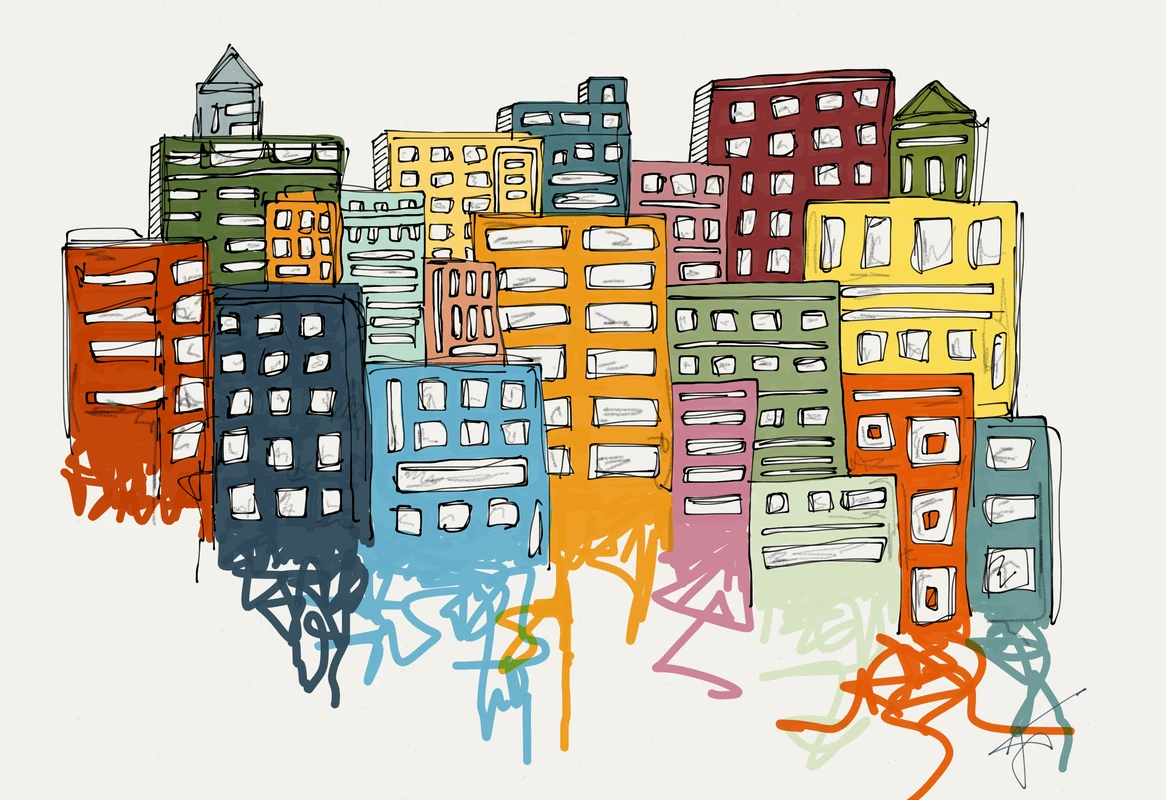
In a modern liberal democracy, the waiting list is more than a logistical convenience; it is an article of faith. It reassures us that beneath the sprawling, indifferent machinery of the welfare state, there is an operating principle grounded in moral order. It promises that patience will be rewarded, that need is quantified objectively, and that everyone—even those who have been reduced to sleeping on concrete or in the back of a hatchback—stands in an orderly, transparent line.
In New South Wales, the state has constructed one of the most remarkable monuments to that faith in the country.
By June 2024, the NSW Housing Register had swelled to more than 56,000 households. Within that ledger of deferred hope, over 6,000 households had been waiting for a home for more than a decade. More than 750 had been waiting for twenty years or longer. Twenty years is not an administrative inconvenience; it is a human lifetime. It is enough time for an infant to complete secondary schooling and navigate young adulthood. It is enough time for multiple changes of government, endless policy white papers, and ministerial reorganisations. It is enough time, quite frankly, for the bureaucracy itself to forget the original rationale for the queue.
Yet there is a fundamental paradox lurking at the heart of this system: the queue, it turns out, is largely an illusion.
According to the NSW Auditor-General’s June 2025 performance audit into social housing, nearly a third—approximately 31 per cent—of all housing offers made in 2023–24 did not go to the highest-ranked person generated by the algorithm of need. Instead, they were allocated through "manual selection"—departmental officers essentially plucking an applicant of their choosing from the margins and bypassing the computerized shortlist. In parts of the state, such as Northern NSW, manual selections accounted for more than 90 per cent of all allocations.
And the department was not centrally monitoring or auditing these decisions.
It is worth pausing on what that actually means.
On paper, the state demands absolute, exhausting transparency from its poorest citizens. To gain entry onto this register, vulnerable families are required to submit to a forensic, 30-category evidentiary gauntlet. They must prove their poverty, produce up-to-date documentation during periods of profound trauma, secure specialist medical endorsements, and establish that they are without options in a hostile private rental market. The bureaucracy scrutinises every detail of their lives before granting them a ranking.
Yet, when the tangible public asset—the front door, the four walls, the physical home—is finally ready to be allocated, the rules of the queue are quietly set aside. In nearly one out of every three instances, an individual officer simply decides who gets the keys.
Now, let’s be careful here. Discretion is not inherently an administrative vice. As the Auditor-General observed, frontline public servants frequently confront emergencies that an algorithm is ill-equipped to comprehend. When a woman is escaping domestic violence with her children, or when flood victims are stranded in crisis motels with no place left to turn, no reasonable person would demand that an official remain paralysed by an inflexible computer shortlist.
Discretion exercised within transparent bounds, guided by clear policy and anchored by rigorous oversight, is sound administration. But discretion exercised in the shadows, severed from independent audit and central scrutiny, is something else entirely.
It turns public policy into personal patronage.
The Unspoken Economy of the Front Door
Part of the reason we fail to scrutinise this process is that we persist in viewing social housing through the prism of charity. We treat it as an act of welfare benevolence toward the destitute, rather than what it actually represents: the distribution of a massively valuable public asset.
Look at the underlying economics. If a modest Sydney apartment commands $650 per week on the open rental market, and an approved public housing tenant pays a subsidised 25 per cent of their income—say, $150 a week—the state is delivering an effective subsidy of $500 every single week. That represents an annual benefit of $26,000. Over a twenty-year tenancy, that benefit amounts to more than half a million dollars.
That is not an indictment of public housing; it is an argument for its preservation and expansion. But it is also an undeniable financial reality. A public housing tenancy represents a capital asset transfer of profound value.
Ask yourself this: if a state agency were distributing discretionary grants worth half a million dollars to individual members of the public, entirely at the unmonitored whim of local officials, would parliament accept it? Would Treasury tolerate it? Would the public accept assurances that everyone involved was surely acting with pure intentions?
Hardly. Yet because the recipients are marginalised, we look away.
The Shadow of Operation Hotspur
This is not a hypothetical debate born in an academic vacuum. New South Wales has already lived through the consequences of leaving this discretionary valve unmonitored.
In 2002, the Independent Commission Against Corruption (ICAC) delivered a scathing report arising from Operation Hotspur. An officer with the NSW Department of Housing named Steven Klimoski was found to have engaged in corrupt conduct after soliciting bribes—demanding $8,000 from an applicant desperate for priority accommodation. The applicant handed over thousands of dollars in cash just to move her paperwork to the top of the pile.
What made that case so revealing was not merely the petty criminality of the bribe itself; it was the nature of the commodity being traded. The housing officer was not selling property. He was selling expediency. He was commodifying the power to bypass the line. As Klimoski himself put it to an applicant, he was "just making the paper move faster".
Following that scandal, ICAC issued clear recommendations: discretionary approvals must be strictly audited, documentation must be standardized, and the department must maintain systemic oversight of priority decisions to ensure that public authority cannot be monetised.
That was nearly a quarter of a century ago.
Yet in 2025, the Auditor-General revealed that Homes NSW was still operating in an environment where tens of thousands of allocation decisions bypass the ordinary ranked shortlist every year without systemic central tracking.
To be clear: the Auditor-General made no finding that modern frontline staff are taking cash in envelopes. But that is precisely where our institutional imagination fails us. Corruption does not begin and end with illicit briefcases stuffed with $50 notes.
What happens when the currency being exchanged is bureaucratic convenience? What happens when an agency wants to silence a persistent complainant, smooth over an inter-departmental dispute with police, or cultivate favour with a well-connected non-government provider? When discretionary authority over an extraordinary public benefit is exercised behind closed doors without an audit trail, the danger is not merely bribery—it is the unchecked exercise of institutional patronage.
The Invisible Casualty
Whenever discretion supplants transparent procedure in a resource-starved system, it creates a silent, zero-sum casualty.
In social housing, a property is not conjured out of thin air. If an applicant is manually selected outside the shortlist, another person who was entitled to that home by virtue of objective need and years of patient waiting is bypassed.
And the cruelty of this arrangement is that the victim never knows.
There is no formal rejection letter. There is no notification explaining that someone else was slipped ahead of them because a local office decided to exercise unmonitored discretion. The bypassed applicant simply remains on the register, wondering why the phone never rings, enduring another winter sleeping rough or dragging their children across temporary motels.
The NSW Government’s Homelessness Strategy 2025–2035 prominently declares that housing is a fundamental human right. It is a noble, impeccably phrased sentiment. But a right cannot exist as a gift granted by administrative discretion. A right is an entitlement that can be asserted, defended, and audited. If your access to shelter depends not on demonstrable need under enforceable rules, but on whether a local bureaucrat decides to pluck your file from the drawer, you do not have a right.
You have a favour.
The Auditor-General recommended that the Department of Communities and Justice establish rigorous, regular monitoring and reporting of all manual allocations. Homes NSW accepted the recommendation. But promises on paper have been the default currency of this system for two decades.
The public housing estate does not belong to the officials who manage the waitlist. It belongs to the public, held in trust for those who need it most. And until the state can account for every single set of keys it hands out, it has no ethical standing to ask the thousands of people shivering on the pavement to believe in the fairness of the queue.
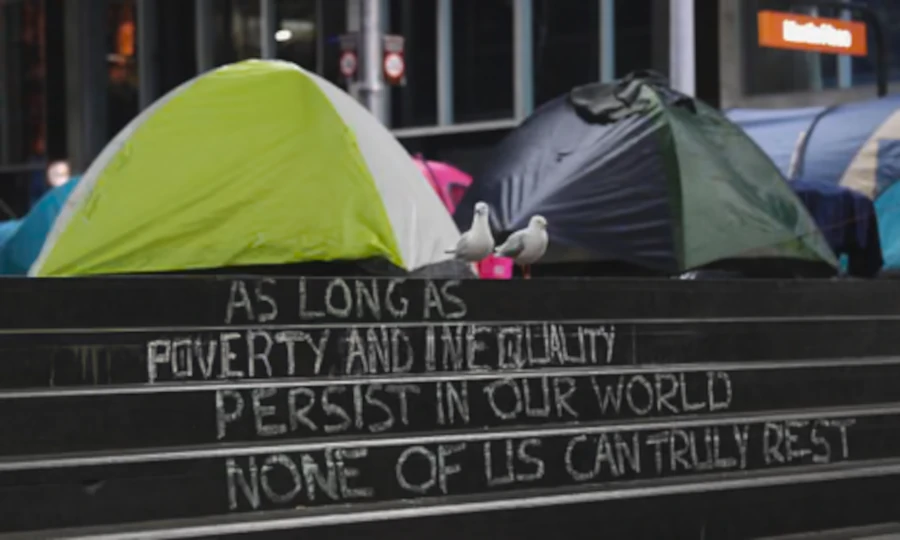 One Paycheque from Homelessness: The Housing Crisis Confronting NSW
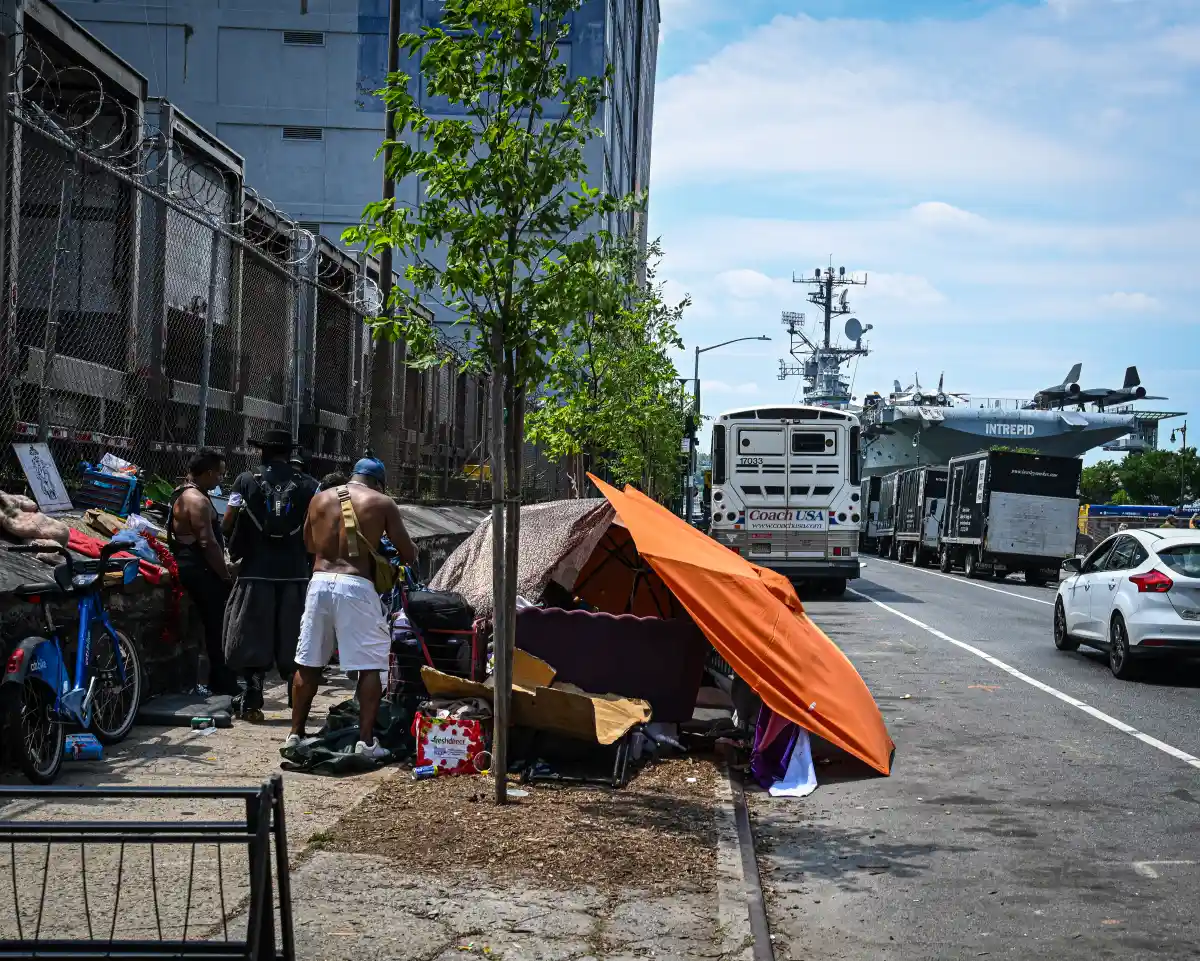 Mamdani admin stops automatically sending cops to 311 homeless encampment complaints
 Protest planned over NT Government’s decision to close homeless shelter
 The wait for unbuilt social housing felt as Sydney's homeless 'still out on the street'
 St Vincent’s homelessness leader named Unsung Hero at 2026 Sydney Awards
 Finding Roger Davies: how one sister’s search for her long-lost brother unearthed a state’s destitute burial failures
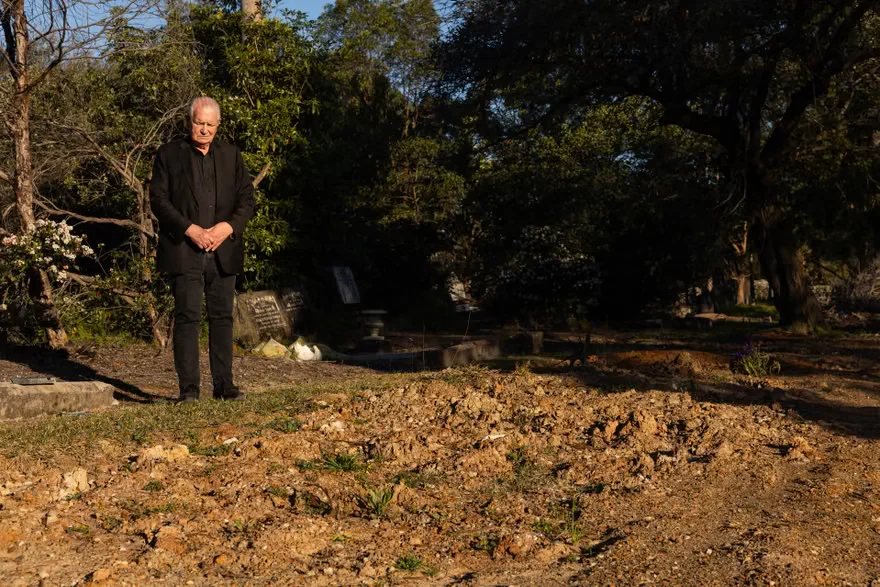 Sydney’s ‘king of town hall’ ended up in a pauper’s grave. His support workers are shocked they weren’t told


